spring 1986
The House in 1986
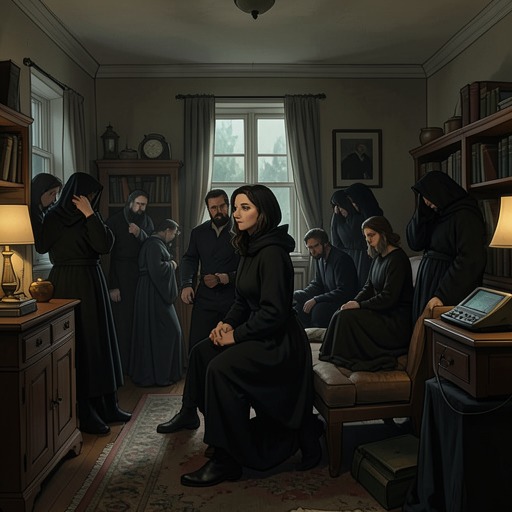
In a [Santiago](entity:location-recall-location-050ad34026d1) scarred by protests, blackouts, and the promise that the dictator would fall, the [Queen of the Corner](entity:character-recall-character-queen-of-the-corner-649f4e770d42) makes a home in a ramshackle house. Her music and extravagant decorating turn it into a refuge and a stage, even as the neighborhood watches and the state’s violence presses in from outside.
Her account also bears the weight of a life shaped by poverty, rejection, and male violence. The house becomes the first place she can claim as wholly her own, and the fragile center of the story that follows.
spring 1986, after the Queen settles in
Carlos Brings the Boxes
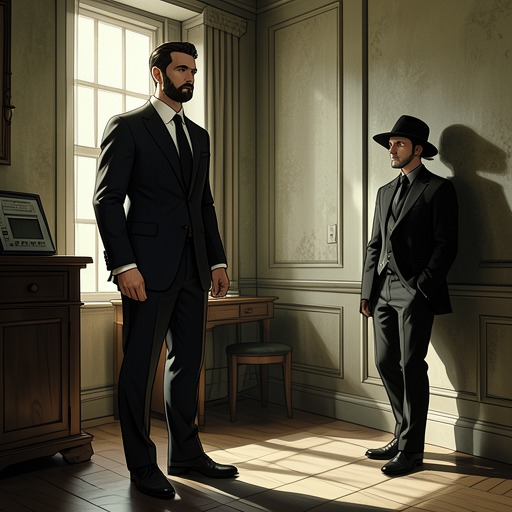
[Carlos](entity:character-recall-character-carlos-8b92f5b0d880), a handsome young man who gives little away about himself, asks the Queen to store boxes he calls censored books. She is captivated by his voice and eyes, arranges the crates as furniture, and gladly lets him and his companions use the house for late-night meetings.
She recognizes that the visitors are secretive and that the boxes matter, but accepts Carlos’s explanations rather than pressing him. Her hospitality becomes both an expression of her longing and an unwitting part of a clandestine political operation.
during the early meetings
A Life Told Over Coffee
While [Carlos](entity:character-recall-character-carlos-8b92f5b0d880)’s friends meet upstairs, the Queen keeps him company with coffee and stories. She tells him about street hustling, the early death of her mother, her father’s abuse, and the army enlistment she escaped by leaving home.
Carlos listens, more attentive than she expects, and asks to hear the rest another day. Her memories expose the violence behind her theatrical bravado, while their quiet conversations deepen the attachment she is already turning into a private romance.
spring 1986, before the country picnic
The Metal Cylinder Arrives
[Carlos](entity:character-recall-character-carlos-8b92f5b0d880) brings a heavy metal cylinder to the house and calls its contents valuable manuscripts. The Queen suspects it may be something more dangerous, but refuses to open it; instead, she carries it upstairs and decorates it with lace and flowers.
Carlos is moved by her unknowing kindness and embraces her. The cylinder’s threatening presence remains hidden inside her domestic fantasy, a reminder that her home and her affection have become entangled with risks she does not yet understand.
the day after the cylinder arrives
The Country Invitation
[Carlos](entity:character-recall-character-carlos-8b92f5b0d880) invites the Queen to the [Cajón del Maipo Valley](entity:location-recall-location-e63a08d5130e), saying he needs to do fieldwork. She spends the night imagining the outing, planning food and music, and wondering whether to wear her cherished yellow hat.
For her, the invitation promises an almost impossible intimacy: a day alone with the man she loves. She approaches it as a romantic excursion, unaware that Carlos has a practical reason to bring her along.
the country outing
The Checkpoint Disguise
On the drive toward the mountains, [Carlos](entity:character-recall-character-carlos-8b92f5b0d880) asks the Queen to put on her yellow hat, gloves, and cat-eye glasses when soldiers stop their car. She gives the guards a flamboyant performance, and they wave the pair through without searching the vehicle.
Only after they are safely past does Carlos laugh and touch her shoulder. The episode reveals that her drag persona can function as more than self-expression: her quick improvisation has shielded a secret operation from scrutiny.
the country outing, later that day
A Picnic Below the Road
At a secluded hillside above the road, the Queen spreads out an embroidered cloth and watches [Carlos](entity:character-recall-character-carlos-8b92f5b0d880) eat, work, and move through the landscape. She turns the scene into an imagined tableau of lovers, while Carlos measures the terrain, takes notes, and checks the road.
When the presidential motorcade passes, he photographs her with the road behind her. The outing is therefore both a scene of almost unbearable happiness for the Queen and part of the Front’s reconnaissance of Pinochet’s route.
during the return drive from the picnic
Pinochet Notices the Couple
In the passing motorcade, [Augusto Pinochet and Lucy](entity:relation-recall-relation-augusto-pinochet-and-2004dc232dff) talk about the young couple on the hillside. Pinochet recalls the person in the yellow hat and, realizing the Queen is a man, reacts with disgust and orders the mayor to be alert.
The encounter links the Queen’s private daydream to the dictator’s surveillance and prejudice. The person who unknowingly helped the Front’s preparations has also become visible to the regime’s leader.
the evening after the picnic
Carlos Leaves Without Goodbye
Back in the neighborhood, [Carlos](entity:character-recall-character-carlos-8b92f5b0d880) hurries away as soon as the car stops, leaving the Queen with flowers, picnic leftovers, and no explanation. She tries to turn disappointment into a comic performance, but his abrupt departure wounds her.
When Carlos returns, he hints that his next departure could be permanent. The Queen asks when his birthday is instead, and they play at choosing a gift: an arrow and the bow that would carry it. Their flirtation offers her hope without clarifying the danger closing around him.
before September 1986
Pinochet’s Failed South Africa Visit
During a motorcade journey, [Lucy](entity:character-recall-character-lucy-680a57cd8fba)’s complaints about her humiliating trip with Pinochet to [South Africa](entity:location-recall-location-14eca21eb0ed) spill into memory. The visit ended with the presidential party unable to land in [Cape Town](entity:location-recall-location-8ea16de81ff6), an international rebuff she blames on her husband’s stubbornness and the bad advice he ignored.
Pinochet endures her chatter in silence, privately resenting her and recalling the couple with the yellow hat. The episode shows the isolation of his rule and the brittle domestic life behind its public display of authority.
early September 1986
The Tablecloth for September 11
[Doña Catita](entity:character-recall-character-do-a-catita-3e5c7dfdce59) calls for the embroidered tablecloth she commissioned for a military gathering on September 11. The Queen invents excuses for the delay because she had taken the cloth on the picnic with [Carlos](entity:character-recall-character-carlos-8b92f5b0d880), then finally goes to deliver it.
Her work has long sustained her livelihood, and Doña Catita is an important client. Yet the Queen’s private attachment to Carlos has already begun to disrupt the carefully maintained arrangements on which her precarious independence depends.
early September 1986, en route to Doña Catita’s home
The Queen Defies a Bus Passenger
On the bus, a passenger condemns protesting students as ungrateful troublemakers. The Queen unexpectedly answers that the country is not as well as the government claims and that soldiers, explosions, and shootings have made ordinary life frightening.
Students applaud her, and the Queen is startled by her own courage. Her political awareness is no longer merely borrowed from [Carlos](entity:character-recall-character-carlos-8b92f5b0d880) or the radio; it has begun to emerge from what she sees and hears around her.
early September 1986, at Doña Catita’s mansion
The Vision at the Generals’ Table
Left waiting in the mansion, the Queen lays her embroidered tablecloth across the enormous dining table. She imagines the generals celebrating September 11, then sees the banquet turn into a grotesque feast of blood and murder, her birds and angels drowning in the stained fabric.
The vision overwhelms her. She leaves without handing over the cloth, abandoning a valued client and the money she expected, but refusing to lend her work to a celebration of military violence.
early September 1986, after leaving the mansion
A Visit to Rana’s House
Rather than return directly home, the Queen visits her former companions in [Recoleta](entity:location-recall-location-ff288a435d5b). She remembers how [Rana](entity:character-recall-character-rana-ce2fbd805d06) once took her in, fed her, and taught her embroidery, and also how the two fought when the Queen’s success drew away Rana’s customers.
Time and affection have softened the rupture. [Lupe](entity:character-recall-character-lupe-c557b7d7f637) teases her about [Carlos](entity:character-recall-character-carlos-8b92f5b0d880) and the picnic, while the Queen protects her romantic hopes behind jokes and insists she does not need advice about the young man.
Carlos’s birthday, early September 1986
A Birthday Party for Carlos
The Queen prepares a lavish children’s party for [Carlos](entity:character-recall-character-carlos-8b92f5b0d880), borrowing a record player and inviting neighborhood children. He arrives to find them singing around a cake, and his emotion breaks through as he makes a wish and blows out the candles.
The celebration briefly creates the generous, shared world the Queen imagines for him. After the children leave, she plays a treasured record and raises a toast with Carlos, whose presence makes the party feel like a rare gift in a life otherwise marked by want.
after Carlos’s return for the boxes
The Queen Delivers a Package
[Carlos](entity:character-recall-character-carlos-8b92f5b0d880) asks the Queen to deliver a heavy package downtown, giving her instructions to find a mustached man but withholding its contents. She agrees without asking further questions, trusting that the favor is simple and that Carlos trusts her.
Tear gas and a street clash erupt before she reaches the meeting point. She loses the package in the confusion, then finds it under a bus seat and completes the delivery despite the police assault and the surrounding chaos.
after the package delivery
The Queen Learns Carlos’s Alias
When [Carlos](entity:character-recall-character-carlos-8b92f5b0d880) comes to collect the remaining boxes and metal cylinder, the Queen finally confronts him about what he has been hiding. She shows him the identity card but admits she never read it; he explains that Carlos is an alias used for clandestine work.
He confirms that he belongs to the [Manuel Rodríguez Patriotic Front](entity:organization-recall-organization-bbd31c6cb281) and says the Queen has been involved without knowing the full extent. They agree on a secret phrase, borrowed from a song, as a code for communicating if necessary. Her hospitality now becomes conscious complicity, though she remains outside the circle’s operational details.
September 1986, at the Cajón del Maipo Valley
The Cadet Is Expelled
At the country residence, Pinochet notices a cadet and bodyguard sharing an easy, intimate moment. He calls the young cadet a pervert, orders him removed, and has him discharged rather than tolerate his presence in uniform.
The incident reveals the dictator’s fixation on policing masculinity and sexuality, even within the armed forces he commands. His private contempt mirrors the danger faced by the Queen, while the hummingbirds in his garden persist as an irritation he cannot control.
September 11, 1986, afternoon
The Queen Goes to the Disappeared Families
After a sleepless, anxious day, the Queen leaves the house and travels downtown. A policeman strikes her for approaching a protest leaflet; at the [Plaza de Armas](entity:location-recall-location-45c4352e6add), she joins women demanding justice for relatives taken and never seen again.
The demonstration is broken up, and she runs through tear gas with a photograph of a disappeared person in her pocket. Her solidarity is tentative but real, connecting her private fear for [Carlos](entity:character-recall-character-carlos-8b92f5b0d880) to the grief of families living with state violence.
September 11, 1986, around 7:10 p.m.
The Ambush on the Mountain Road
As Pinochet’s convoy returns toward [Santiago](entity:location-recall-location-050ad34026d1) along the [Achupallas grade](entity:location-recall-location-a5dc6e73a609), a trailer blocks the road and gunfire erupts from the surrounding heights. The attackers blast vehicles and strike the motorcade; guards scatter as Pinochet cowers on the floor of his Mercedes-Benz.
The chauffeur reverses through the wreckage and escapes with the dictator, who is left trembling and soiled with fear. The armed operation fails to kill him, but shatters the regime’s performance of invulnerability and becomes the decisive event that puts the Queen in immediate danger.
September 11, 1986, around 7:15 p.m.
The Queen Sees the Ambush
In a downtown cinema, the Queen watches an action film while a hustler waits beside her. As the on-screen violence blurs into imagined images of [Carlos](entity:character-recall-character-carlos-8b92f5b0d880) fighting on the hillside, she calls out warnings to him as if he were present.
The ambush becomes real to her through this cinematic projection: her love and fear make the distant operation into a scene she believes she can accompany. When the film ends, rumors on the bus confirm that Pinochet was attacked and escaped, while the Front’s members got away.
September 11, 1986, after the ambush
Pinochet’s Fear After the Attack
At the country house, Pinochet is bathed and given a tranquilizer while officials rush in and [Lucy](entity:character-recall-character-lucy-680a57cd8fba) tells anyone who will listen that she had foreseen danger. The shattered Mercedes-Benz is presented as proof that the Virgin saved the president, and Lucy argues with reporters about the attack.
Pinochet is unable to shake his fear. Nightmares of death and humiliation invade his sleep, while Lucy’s chatter becomes both an irritant and a tether to ordinary life. The attempted assassination has left the dictator physically safe but psychologically exposed.
the night of September 11, 1986
Santiago’s Night of Searches
The city is sealed by troops, with house-to-house searches, arrests, broken doors, and people forced to wait through the night under military guard. The Queen keeps the kettle ready and the radio low, listening for news and hoping [Carlos](entity:character-recall-character-carlos-8b92f5b0d880) or his companions will seek shelter.
The next morning [Laura](entity:character-recall-character-laura-e8b3bd8aefc4) calls to say Carlos is safe but that the Queen’s house will soon be searched. With other safe houses already raided, she must leave [Santiago](entity:location-recall-location-050ad34026d1) at once. The shelter she offered the Front has exposed her to the machinery of repression.
September 12, 1986, before dawn
The Queen Leaves Her House
[Laura](entity:character-recall-character-laura-e8b3bd8aefc4) and a driver take the Queen from her neighborhood and tell her that the secret police are likely to search her home. They instruct her to remove evidence, leave behind most belongings, and wait for transport to an undisclosed destination the following morning.
The Queen packs the few objects that hold her past together, including the tablecloth, her hat, photographs, magazines, and radio. Before leaving, she brings her unfinished work and radio to [La Rana](entity:character-recall-character-la-rana-ae1e30aefd80), embracing the friend who once rescued her and now watches her depart without knowing the full story.
September 12, 1986, later that morning
The Reunion at Viña del Mar
[Laura](entity:character-recall-character-laura-e8b3bd8aefc4) brings the Queen to a café in [Viña del Mar](entity:location-recall-location-2ac69754581a) and tells her to wait. [Carlos](entity:character-recall-character-carlos-8b92f5b0d880) appears, and after a brief reunion he hurries her away through security checks and toward [Valparaíso](entity:location-recall-location-078792aa7940), with armed patrols searching the roads.
The Queen is relieved to see him but understands that the encounter is governed by urgency, not the leisurely romance she longs for. Carlos’s return restores their intimacy just long enough to carry her into the next stage of flight.
September 12, 1986, afternoon
A Day at Laguna Verde
[Carlos](entity:character-recall-character-carlos-8b92f5b0d880) and the Queen reach [Laguna Verde](entity:location-recall-location-63c75de3a902), where the beach opens into a rare landscape of quiet. They run into the surf, fall together in the sand, and briefly become like children at play, allowing their affection to surface without the usual jokes and evasions.
They share bread, cheese, and wine on the embroidered tablecloth. The Queen confronts the fact that Carlos’s tenderness does not mean he can return her love, and asks him about the ambush; he insists it was an ambush, not simply an attack, and acknowledges that the Front never fully trusted her.
the evening at Laguna Verde
Carlos Offers an Escape to Cuba
As they watch [Valparaíso](entity:location-recall-location-078792aa7940)’s lights, [Carlos](entity:character-recall-character-carlos-8b92f5b0d880) asks the Queen to go with him to [Cuba](entity:location-recall-location-b871768274f6). He says everyone involved in the operation is leaving the country and presents her departure as part of the plan to keep her safe.
The Queen understands the offer as a possible shared future, then refuses to chase it as a promise of love. She says their stories crossed only briefly and that what never happened between them will not happen elsewhere. The possibility of escape cannot undo the unequal bond that has defined their relationship.
the night of September 12, 1986
The Tablecloth Left Behind
The Queen and [Carlos](entity:character-recall-character-carlos-8b92f5b0d880) leave [Laguna Verde](entity:location-recall-location-63c75de3a902) by taxi, carrying her bags but not the embroidered tablecloth. Behind them, the tide advances over the cloth on the sand, covering the birds and cherubim that had repeatedly marked her attempts to make a home and a shared life.
The Queen asks for a radio and learns the car has none, then hums a song about little figures and birds that want to fly. The novel ends with her in motion and the beloved object surrendered to the sea: her escape continues, but her love story remains unresolved.